Emergency removal
Anything still on a structure, a vehicle, or across the drive. That comes before cleanup, not after.
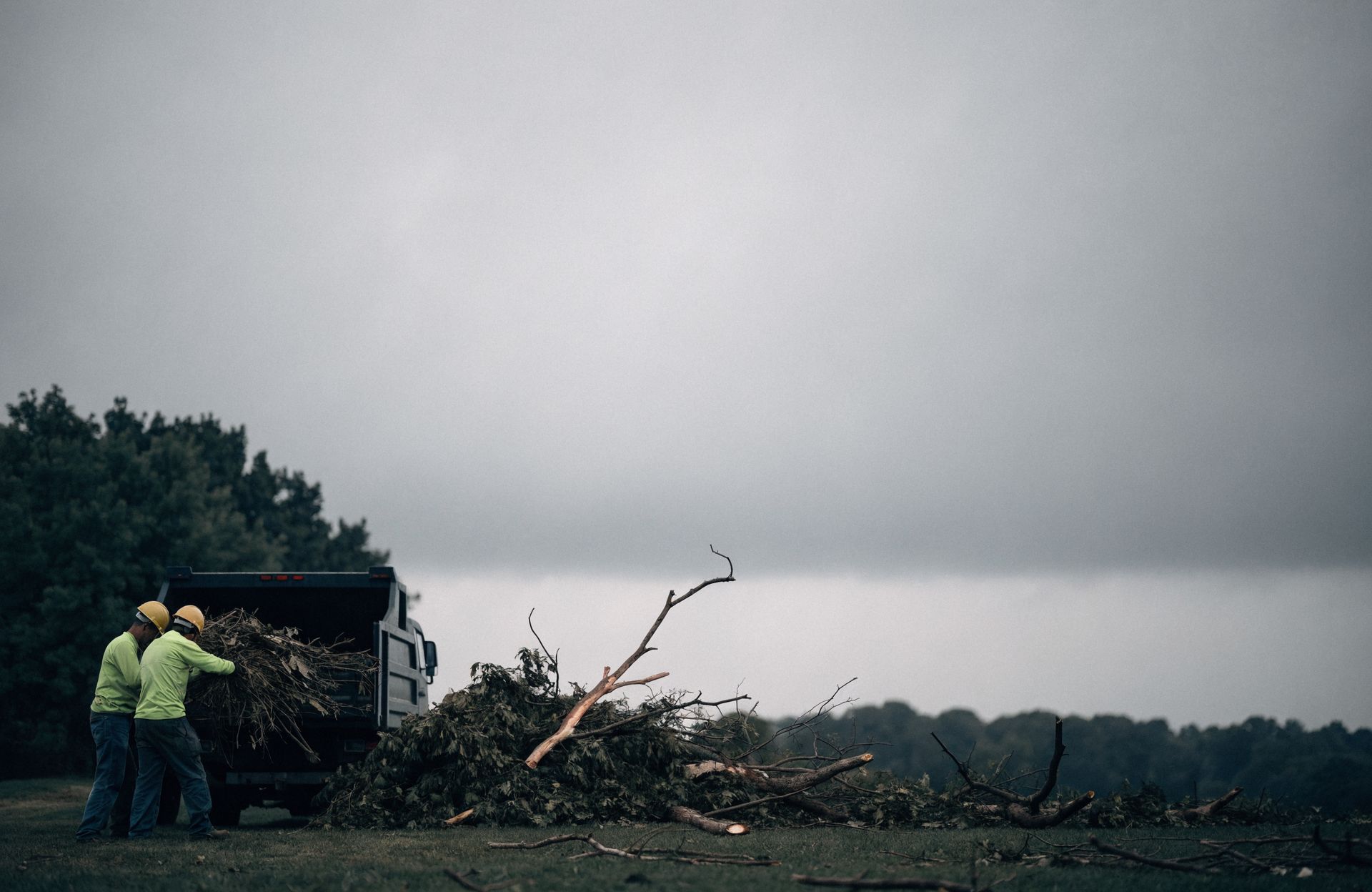
Limb piles, split trunks, uprooted trees, and debris spread across the lot, cleared and hauled off. We also check what is still hanging in the canopy before we leave.
Call or text anytime. If we miss you, we’ll call you right back.
A photo of the yard from the driveway usually tells us most of what we need.
Cleanup is the work that comes after the emergency is over. The tree is off the house, nothing is actively threatening anybody, and what is left is a yard full of material nobody can move with a pickup and a bow saw. That is this job. If something is still on a structure or across the drive right now, start with emergency tree removal instead, because that gets handled first.
Material is chipped on site where there is room for the truck, and hauled off where there is not. Either way it leaves. The most common complaint about storm work is a crew that cuts everything up, stacks it at the curb, and disappears, so we price the haul-off into the job rather than treating it as an upsell.
Cleanup is priced on volume and access rather than by the hour, and volume is the thing homeowners consistently underestimate. A single mature limb that looks manageable lying on the lawn fills more of a truck than anyone expects, and a lot that took two or three trees worth of debris is usually a multi-load job. Access decides the rest of it. If the truck can back near the pile, the work is straightforward. If every piece has to come from a back corner through one gate, that is where the hours go. We walk the property and give you the number before anything starts.
Out-of-town crews follow storms down the coast, and after a named system they will be knocking on doors in Pooler within days. Some are fine. Many are uninsured, which matters enormously, because if an uninsured worker is hurt in your yard or drops a limb through your roof, that becomes your problem and your policy. Ask for a certificate of insurance and check the name on it. Be wary of anyone who only takes cash, wants a large deposit up front, cannot give you a local address, or pressures you to sign immediately. A legitimate contractor will happily wait while you read the estimate.
After a declared storm event, the county or the city sometimes runs curbside collection for vegetative debris. When that happens it is worth using, but it comes with conditions. Vegetative material has to be kept separate from construction debris and household waste, it has to sit at the right of way without blocking the road or a drain, and collection after a large event can run for weeks rather than days. Rules change from event to event, so check what has actually been announced rather than assuming last time applies.
Two things curbside pickup will not solve. It does not touch anything still standing, hanging, or attached, which is the part that matters for safety. And it does not cover material you were not able to cut and drag to the street in the first place. We can do the cutting and stage everything at the curb for county pickup, which is usually the cheaper path, or take it all away ourselves. Tell us which you want when we quote it.
The tree that came down is the obvious problem. The ones worth worrying about are the neighbors it was standing next to. A canopy that has just taken 70 mph gusts can be holding damage that is invisible from a lawn chair, so while we are on site we look for hangers resting in the canopy, fresh cracks in major unions, torn bark where a limb ripped away, and soil heaving or cracking around the base that says a root plate has started to move. Any of those turns a healthy-looking tree into a candidate for tree removal in Pooler or at minimum for corrective tree trimming before the next system arrives.
Photograph the damage before we start if you have not already. Whether or not you end up filing, having a clear before-and-after set costs nothing and you cannot go back and get it later.
Anything still on a structure, a vehicle, or across the drive. That comes before cleanup, not after.
For the trees the storm compromised but did not finish. Cracked unions and lifting root plates do not heal.
Corrective pruning on torn limbs, and thinning before the next season. The cheapest storm work there is.
Once the downed trunk is gone, grinding what is left gets the yard back to level and plantable.
Emergency removal deals with an active hazard, a tree on the house, across the driveway, or hung up over somewhere people walk. It takes priority over scheduled work and it is priced as its own job. Cleanup is the aftermath, the limb piles, split trunks, and debris spread across the lot once nothing is actively threatening anybody. Many properties need both, in that order.
Sometimes. After a declared event the county or city may run curbside collection for vegetative debris, and when it happens it is worth using. The conditions matter. Vegetative material has to stay separate from construction debris and household waste, it goes at the right of way without blocking the road or a storm drain, and collection after a large event can run for weeks. Rules change event to event, so check what has actually been announced. We can cut and stage material at the curb for pickup instead of hauling, which is usually cheaper.
Yes, and it is the step people skip. A canopy that has taken high wind can hold damage you cannot see from the ground. What we look for is hangers resting in the canopy, fresh cracks in major branch unions, torn bark where a limb ripped away, and soil heaving or cracking at the base that says the root plate has moved. Any of those changes a healthy-looking tree into one worth acting on before the next system.
It depends on what was damaged. Coverage is usually strongest when a tree damaged a covered structure, and in that case removal is often part of the claim. Many policies also include a limited allowance for debris removal when a tree comes down without hitting anything, though it is typically a small capped amount. Deductibles and limits vary enough that you have to read your own policy. We can provide an itemized invoice for the adjuster.
Ask for a certificate of insurance and check that the name on it matches who you are talking to. An uninsured worker hurt in your yard, or a limb through your roof, becomes your problem otherwise. Treat cash-only demands, large up-front deposits, no local address, and pressure to sign on the spot as reasons to slow down. Get the price in writing before work starts. A legitimate crew will wait while you read it.
Send a photo of the mess and we will quote clearing it. Licensed, insured, and the debris leaves with us.
Call or text anytime. If we miss you, we’ll call you right back.